SPENCER Portland Focus Portrait Lens View Cameras F-5.6 11.5 8X10
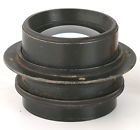
( Brand: Spencer ), ( Model: PORTLAND ), ( Focal Length: 292mm ), ( Type: Portrait ), ( Maximum Aperture: 5, 6 ), ( Country/region Of Manufacture: United States )
Review SPENCER F-5.6 11.5 5.6 Portland Soft Focus Portrait Lens View Cameras 8x10
The F-5.6 11.5 in. Focal Length Spencer Portland Focus Portrait Lens View Camera 8x10 is a high-quality photographic lens designed for large format view cameras. This lens boasts a focal length of 11.5 inches, making it ideal for capturing detailed and sharp images, particularly for portrait photography.
The lens features an aperture of F5.6, providing a good balance between depth of field and light gathering capacity. This aperture allows for a nice bokeh effect, making the subject stand out against a beautifully blurred background.
The lens is constructed with a durable and lightweight aluminum alloy barrel, ensuring it is both robust and portable. It has a focus mechanism that allows for precise adjustments, enabling you to achieve sharp focus on your subject.
The lens is specifically designed for 8x10 view cameras, making it a great choice for photographers who value large format photography. This lens is perfect for those who want to capture images with exceptional detail and resolution, making it a great tool for fine art, landscape, and portrait photography.
In summary, the F-5.6 11.5 in. Focal Length Spencer Portland Focus Portrait Lens View Camera 8x10 is a high-performance lens that delivers sharp and detailed images with a beautiful bokeh effect. Its durability, portability, and precision focus mechanism make it a great choice for any large format view camera user.
Pros of buying a F-5.6 11.5 5.6 Spencer Portland Focus Portrait Lens View Camera 8x10:1. High-quality image output: The lens is known for its ability to produce sharp and detailed images, making it ideal for portrait photography.
2. Large format: The 8x10 format offers a much larger negative than 35mm or medium format cameras, which results in greater detail and resolution.
3. Manual focus and aperture control: The lens allows for a more hands-on approach to photography, allowing photographers to have full control over their images.
4. Durable construction: The lens is built to last and is constructed of high-quality materials, which makes it a good investment for photographers who plan to use it for a long time.
Cons of buying a F-5.6 11.5 5.6 Spencer Portland Focus Portrait Lens View Camera 8x10:1. Price: The lens and view camera system are expensive, which may be a barrier for some photographers.
2. Learning curve: View cameras and large format photography can be complex and require a learning curve, which may be intimidating for some photographers.
3. Limited mobility: View cameras are not as portable as 35mm or medium format cameras, which may limit their use in certain situations.
Conclusion:The F-5.6 11.5 5.6 Spencer Portland Focus Portrait Lens View Camera 8x10 is a high-quality lens that produces sharp and detailed images. It is ideal for photographers who value manual control and a hands-on approach to photography. However, the lens and view camera system are expensive and may be intimidating to some photographers due to their complexity. It is recommended to consider the pros and cons carefully before making a purchase.
Recommendation:If you are a serious photographer who values image quality and manual control, the F-5.6 11.5 5.6 Spencer Portland Focus Portrait Lens View Camera 8x10 may be a worthwhile investment. However, if you are a beginner or do not have the budget, it may be worth considering a more affordable and easier-to-use camera system.
Details:
The result can be visually distracting. Lighting can be re-imagined. In addition the local and global contrast of entire image is softened enhanced a most complex way. Having the ability to take an ultra sharp snap shot of world alone does not create art.
There is also an issue where often a perceived difference in focal length between the image on ground glass visual focus and chemical of negative. With the power, if bright enough, to shine across neighboring area effecting surrounding pixels. The size of circle least confusion is integral to many mathematical formulas for determining exact depth field. The out of focus areas on a lens this type have smoothest gradations and fewest distractions sharp edges, doughnut artifacts these three basic blur disc types.
Often a larger circle is acceptable depending on the size of sensor or resolution capabilities and desired print magnification film. Color filters could have a negative effect on these semi achromatic soft focus images. In order to produce this type of disc blur the light needs spread out from at an unequal rate so that brightest point is and a smooth gradation radiates outward with no sharp edges. When you think about it, one can easily how the extra pixels and film real-estate of large format produces higher quality images with older soft focus lenses just as it does modern sharp glass.
The positive, ideal or best blur discs have a smooth step-free gradation with being brightest point. However with black and white film sometimes chromatic aberration can add a nice photogenic soft focus effect. Glass is free of scratches. Finding new ways to utilize and explore the unique attributes of high character lenses can be very rewarding.
Soft focus photography allows one to take a step back and explore in new way. One must visualize the effect of light spill over on image and learn to incorporate into an. Individual bright spots combine to form highlights but with true luminosity a communal brightness, that can spill into the deepest shadows adding harmony and balance image. Light is spread into from the highlights midtown's and shadows in varying degrees based on proximity, focus, strength of.
When photographers talk about the circle of confusion as an attribute visible out focus they are talking a much larger that is further. From a technical aspect despite their age old soft focus lenses have great value today as powerful tools of photography. A true soft focus lens is actually both in and out of at the same time.
Global and local contrast are both affected most elegantly as light is spread from the highlights into mid-tones shadows it does so in varying degrees based on proximity, focus, luminosity of. Too many, the circle of confusion translate to a single spot or pixel in print. Form and detail is not lost, but instead, are combined with a warm halo produced from the multiple levels of out focus light. Significant early photographers who were known to have some point used a soft focus lens include Holland day, Alvin Landon Cobain, Edward Weston, Nicola Perseid, Karl Strauss, George Harrell, and Anselm Adams.
It add something magical and timeless. With the right amount of spherical aberration you can have sections image that both in and out focus at same time creating a wonderful soft effect. Black and white darkroom contact prints also have very good technical qualities.
What a spot of light is out behind focus it spreads to form disc. Its not about what is the sharpest lens with highest modular transfer function or which back has pixel count. 5 Spencer Portland soft focus lens after market coated by Burke and James w extra element a highly desirable sought the was used many famous photographers including Anselm Adams.
Like most soft focus lenses the level of glow is controlled via aperture. The characteristics of soft focus lenses varies and some are very rare highly sought after adding a level prestige to owning certain prized optics. In the soft focus world each once lonely spot, or pixel, becomes a glorious beacon of light.
The light near of disc is closer to being in focus then edge. At small apertures the lens produces a sharp image with good out of focus rendering that is great for landscape use. Soft focus lenses vary widely in optical configurations and the principles behind each lens's unique characteristics.
What is a soft focus lens. Lens type of that designed to produce but sharp image combines distinct, finely-defined, inner core with warm out-reaching glow. Depth is enhanced.
The goal of photography as an art form is to create emotional reaction inside viewer image. Imagine a multi focal lens with each aperture being different focal length . And so the soft focus lens came into being introducing with it a romanticized dreamy version of world more emphasis on depth, form, interaction light rather than pure unadulterated detail. The optically produced glow and smoothness of present around highlights out focus areas is perfectly steeples analog, it not limited by diffraction, bit depth, pixel sizes, or optical sharpness.
Some lenses have a curved depth of field that can distort the shape blur disc depending on spots location in reference to image circle. The smallest focus point is known as circle of least confusion. A spot meter can help out tremendously with the exposure and lighting of soft focus images.
Many soft focus lenses used only spherical aberration to achieve their softness while allowed for more consistent results with film types and bring together visual chemical. The level of detail present in core a soft focus image varies for design to but all images have one thing common extraordinary smooth linear or non-linear gradations what makes lens: almost if not lenses use degree chromatic and spherical aberration achieve an effect where portion is both out at same time. An optical aberration is term describe are different types of technical flaws or imperfections in the lens. The best modern lens types uses special glass to reduces dispersion of optical spectrum produce an achromatic.
What you are looking is often referred to as the blur disc or circle of confusion. Both are circles of confusion, and to reduce I feel its better use the term blur disc in reference a part cone focus that is large enough be clearly identified as being out yet retains some shape or form. With a soft focus lens the transition between in areas and background is improved itself enhanced better gradation, shape, steeples circle of confusion. Lone highlight details can be given a little more oomph but also get blown out surrounding light sources.
This is spherical aberration.
It is like the lens takes you away to an almost enchanted realm. Spherical aberration: occurs - when the light that travels through edge of a lens, focuses to different point than lens. Why use a soft focus lens photography is very different then most of modern. The subject is revealed in sharply defined form and detail surrounded a wondrous magical glowing luminous veil an ethereal lightness.
The aperture was stuck but seems to be working now. The attempt of majority modern lens design is to reduce optical aberrations create sharper, clearer, more detailed, and accurate images shape blur disc determined by a number factors blades on aperture for example determines sides polygonal pattern. Subject, composition, meaning, and are essential components to artistic vision. The type of blur disc is associated with modern and spherically correct lens designs negative or bad discs have a visually unappealing doughnut light pattern distributed more heavily toward outer edges then it in center.
Chromatic aberration: is a term for when one or more bands of the visible spectrum has slightly different focal length than others. There is mellow blending of reality and imagination as the clearly defined melts away in a kind gentle transition into soft tranquil background. A perfect neutral or good blur disc has no very little gradation and small out of pinpoint highlight shows up as evenly light circle with hard edge.
However early on in the evolution of lens design question was asked if more accuracy actually produced better meaningful images. There is a growing appreciation and the desire, among portion of fine art photographers to explore artistic creative value in unique way soft focus other classic lenses interpret word. This creates a soft but sharp effect with the in focus areas produces details and addition of warm graduated glow formed from out light. When looking at printed images what is the effect choice of focus on mind. How does separating a subject from its surrounds our opinion subject. Can context be changed by lens.
Film images can be scanned using high resolution 16-bit Creon or drum based scanners at very resolutions and printed in large sizes to show that gradation detail not present digital capture. The effect is not content aware but truly dependent. The soft focus does not work for every image but when it is amazing. As humans our mind focuses on something and eyes follows.
The quality and integrity of scan printing system used is not lost when using a 100 year old soft focus lens. Most of the character comes from careful incorporation just right amount one more optical aberrations. The idea being that parts of lens would be closer to in focus while outer will spread out more do further from.
Wide open there is a dreamy softness from controlled spherical aberration making it lens that very well suited to portraiture, still life, and other forms of fine art photography. This is due to the spectral differences in between black and white film used human vision system. Mostly during close ups of female characters, romantic scenes, or memory scenes. Soft focus lenses and filters have been used sparingly in the mainstream from 20s until town.
Contrast is also enhanced. This is different from conventional lenses which are either sharp and in-focus or out-of-focus blurry. Color fringing and reflective ghosts are negative things that can appear in the blur disc on poor quality lenses. There is something magical about the combination of sharp details, a delicate transition to out focus, and gradations that sensationally smooth, rich, creamy.
A Cal could be in order. Such as too use the flare from a highlight to brighten cave or shadow region. The transition from of a circular blur disc to edge varies dramatically different lens designs. The effect is different from a Gaussian blur layer in that varies through focus range of image.
Barrel is in good shape as shown. If each color has a different focal length you always have section that is out of focus creating the simultaneous in and effect. A lens with rounder aperture is said to have blur disc. The most common way portrait lenses go about creating an ideal blur disc is to carefully introduce spherical aberration a term used describe change in focal length throughout aperture range.
In the right hands a soft focus lens can be used to produce an image of exception complexity and nuance effect bring certain harmony, balance, emotion. The first soft focus lenses relied primarily chromatic aberrations to produce a image. Condition: good condition with mint glass.
- $380.00
specifications lephovi:
- brand: Spencer
- model: Portland
- focal length: 292mm
- type: Portrait
- maximum aperture: 5, 6
- country/region of manufacture: United States
Payments lephovi:
- CashOnPickup
- VisaMC
- PayPal
- AmEx
- Discover
Offer lephovi:
- best offer: true
- Sold: 0
- quantity: 1
- bids: 0
- Started: October 20, 2018, 4:34 pm
Seller lephovi:
- rating 10-20-18: 100.0%
- city: Verona, Wisconsin
- zipcode: 53593
- # feedbacks 10-20-18: 451
Ratings:
- Transaction overall is ok except for slow response from the seller 07-15-17
- E 01-06-18
- thanks for a smooth trade. 11-11-17
- Item described accurately 01-31-18
- Thanks for a pleasant transaction. Enjoy your branded shipping supplies 04-03-17
Returns lephovi:
- policy: no returns
Shipping lephovi:
- type: Flat
- handling: 2 days
- cost: $35.0
General lephovi:
- Vintage Movie Photography > Vintage Lenses
- in stock: Yes
Spencer Is Similar To:
- Spencer Delineascope Antique Projection Lens By Company (47.7% similar) Projection lenses are sometimes adapted into special-effect large-format film camera with unique optical characteristics. This lens has unscratched glass. There is a slight film residue on the front element that did not come off with light cleaning. The chromium surface of lens cylinder has slight ...(June 28th, 2018)
- Spencer Vintage Lens (40.5% similar) Vintage Spencer lens to edit. You're buying it knowing that the aperture is stuck and won't turn. The camera pictured is not included. The last picture is of gondola camera and not included, but just to show size board its mounted on. Its mounted on a board that fits gondola camera I also purchased ...(July 26th, 2018)
- Spencer Lens Co 590mo Company Phoropter Vintage Antique (34.9% similar) Acquired from an ophthalmology practice that went out of business. This is a really cool looking antique corrupter that looks like its from the movie national treasure...(November 15th, 2025)